Anglais · Seconde bac pro · Accompagnement personnalisé · Version adaptée (dys)
Happy Families: Who Does What?
| Contenu | Une séance d'anglais autour du jeu des familles britannique Happy Families : les métiers, la famille, demander poliment une carte et y répondre, présenter une famille inventée. Le jeu de cartes change selon la filière. |
|---|---|
| Public | Seconde bac pro, accompagnement personnalisé, niveau B1. Jeux de cartes au choix : traditionnel (victorien) pour toutes les classes, Vente pour Métiers du commerce et de la vente, Logistique, AEPE pour la petite enfance et le périscolaire. |
| Objectifs | Nommer des métiers ; demander poliment (Excuse me, do you have…?) ; répondre (Yes, I do / No, I don't) ; employer le génitif (the baker's wife) ; présenter une personne au présent simple (He repairs cars) ; comprendre un jeu de mots. |
| Déroulement | Une séance de 55 minutes : mise en route (8 min), vocabulaire (10 min), le point du professeur (10 min), le jeu (17 min), production finale (10 min). Exercices d'entraînement, niveau approfondi et Homework à la suite. |
What you already know
- Family: father, mother, son, daughter, husband, wife.
- Have: I have a brother. She has two sisters.
- Jobs: a teacher, a nurse, a cook, a mechanic.
- Politeness: please, thank you, sorry.
Today: you play a real British card game, ask for cards politely in English and invent a family of your own.
1. Warm-up: meet the families
Montrez la reproduction ci-dessous (cartes authentiques d'une édition Jaques des années 1880, références sous l'image). Pour Mr Bun et Mr Soot, montrez à l'écran les cartes conservées au Victoria and Albert Museum (références en bas de page). Posez les questions, laissez les élèves deviner, puis faites découvrir le jeu de mots : le nom de famille rappelle le métier.
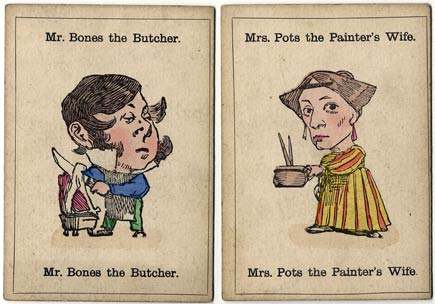
Look and answer
- Look at Mr Bones. What's his job? How do you know?
- What is he holding?
- Look at Mrs Pots. What is she holding?
- Is she the painter? Who is the painter?
- Why is the butcher called Bones?
- Why is the painter called Pots?
- Can you guess the job of Mr Bun? And Mr Soot?
Answers
- He's a butcher. He has a knife and meat.
- Mrs Pots is holding a pot of paint and brushes. She is the painter's wife; Mr Pots is the painter.
- Bones: meat has bones. Pots: a painter uses pots of paint.
- Mr Bun is the baker (a bun is a small round bread roll). Mr Soot is the chimney sweep (soot is the black dust in a chimney).
2. Vocabulary: jobs and families
Le tableau suit le jeu de cartes choisi en haut de page. Faites lire chaque nom de famille à voix haute et demander : What does it make you think of? Le jeu de mots explique le métier.
The family
| Title | Who? | Example |
|---|---|---|
| Mr | the father | Mr Bun, the Baker |
| Mrs | the mother, his wife | Mrs Bun, the Baker (the baker's wife) |
| Master | the son (an old title for a boy) | Master Bun, the Young Baker (the baker's son) |
| Miss | the daughter | Miss Bun, the Young Baker (the baker's daughter) |
The Traditional deck: ten families
| Family | Job | En français | The wordplay |
|---|---|---|---|
| Bun | Baker | le boulanger | A bun is a small round bread roll. Bakers make buns. |
| Bones | Butcher | le boucher | A butcher cuts meat, and meat has bones. |
| Block | Barber | le barbier | A block is a wooden head. Barbers used it to hold and shape wigs. |
| Bung | Brewer | le brasseur | A bung is the stopper that closes a barrel of beer. |
| Dose | Doctor | le médecin | A dose is the amount of medicine you take. |
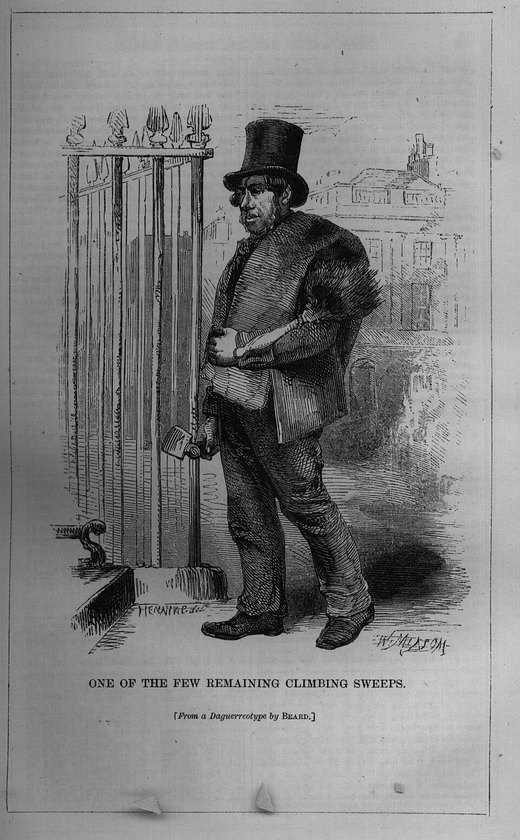
| Soot | Sweep | le ramoneur | Soot is the black dust inside a chimney. |
| Tape | Tailor | le tailleur | A tailor uses a tape measure to measure his customers. |
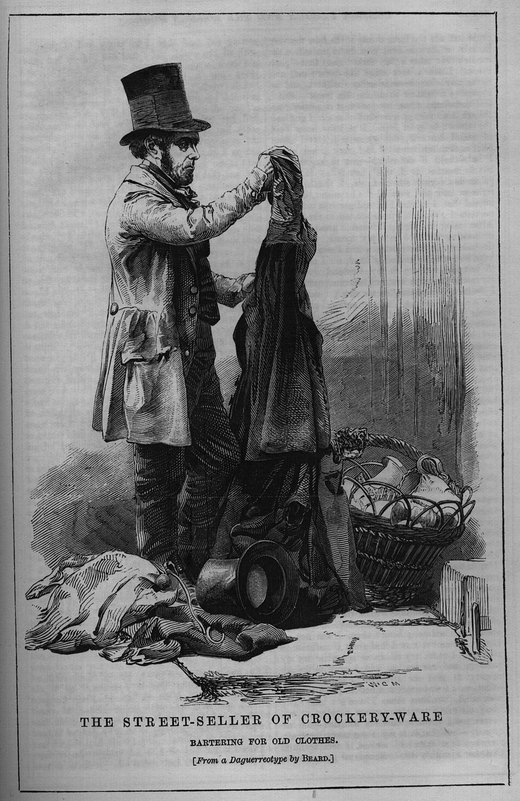
| Pots | Painter | le peintre | A painter works with pots of paint. |
| Chip | Carpenter | le menuisier | A chip is a small piece of wood that falls when you cut it. |
| Grits | Grocer | l'épicier | Grits are coarsely ground grain. Grocers sold them in their shops. |
Real Victorian workers, drawn in 1851, the year of the game. Who is the sweep? Who sells pots?
Exercise 1. Match the family and the job
Write the letter next to each family name.
| Family | Job |
|---|---|
| 1. The Bun family | A. Barber |
| 2. The Bones family | B. Sweep |
| 3. The Block family | C. Butcher |
| 4. The Bung family | D. Baker |
| 5. The Dose family | E. Grocer |
| 6. The Soot family | F. Painter |
| 7. The Tape family | G. Carpenter |
| 8. The Pots family | H. Doctor |
| 9. The Chip family | I. Brewer |
| 10. The Grits family | J. Tailor |
Answers
- The Bun family: D (Baker)
- The Bones family: C (Butcher)
- The Block family: A (Barber)
- The Bung family: I (Brewer)
- The Dose family: H (Doctor)
- The Soot family: B (Sweep)
- The Tape family: J (Tailor)
- The Pots family: F (Painter)
- The Chip family: G (Carpenter)
- The Grits family: E (Grocer)
Exercise 2. Who am I?
Read and find the job.
- I make bread and buns. Who am I?
- I cut meat. Who am I?
- I cut men's hair. Who am I?
- I make beer. Who am I?
- I prescribe medicine. Who am I?
- I clean chimneys. Who am I?
- I make suits. Who am I?
- I paint houses. Who am I?
Answers
- I am a baker.
- I am a butcher.
- I am a barber.
- I am a brewer.
- I am a doctor.
- I am a sweep.
- I am a tailor.
- I am a painter.
Exercise 3. English or French?
Give the English job.
- le boulanger
- le boucher
- le barbier
- le brasseur
- le médecin
- le ramoneur
- le tailleur
- le peintre
Answers
- Baker
- Butcher
- Barber
- Brewer
- Doctor
- Sweep
- Tailor
- Painter
The Vente deck: ten families
| Family | Job | En français | The wordplay |
|---|---|---|---|
| Till | Cashier | le caissier | A till is the cash register where a cashier works. |
| Stack | Shelf-Stacker | l'employé de mise en rayon | To stack means to put things one on top of the other. |
| Deal | Sales Assistant | le vendeur | A good deal is a good price. Sales assistants offer deals. |
| Mannequin | Window Dresser | l'étalagiste | A mannequin is the figure that wears clothes in a shop window. |
| Chief | Store Manager | le directeur de magasin | A chief is a boss, the person in charge. |
| Smile | Customer Service Adviser | le conseiller clientèle | A good adviser always welcomes customers with a smile. |
| Click | E-commerce Manager | le responsable e-commerce | Online customers click to buy. |
| Pitch | Sales Rep | le commercial | A sales pitch is what you say to convince a client. |
| Promo | Marketing Assistant | l'assistant marketing | A promo is a promotion, a special offer. |
| Petal | Florist | le fleuriste | Petals are the coloured parts of a flower. |
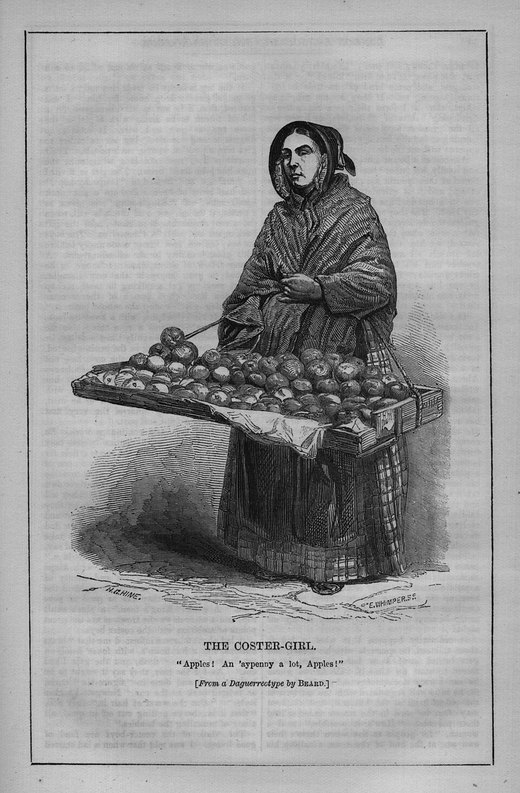
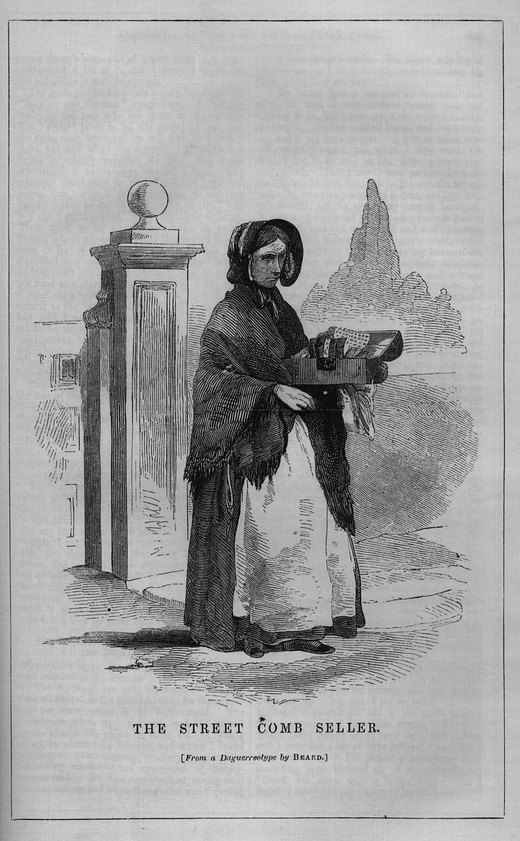
Selling in the street in 1851. What is each woman selling?
Exercise 1. Match the family and the job
Write the letter next to each family name.
| Family | Job |
|---|---|
| 1. The Till family | A. Store Manager |
| 2. The Stack family | B. Marketing Assistant |
| 3. The Deal family | C. E-commerce Manager |
| 4. The Mannequin family | D. Sales Rep |
| 5. The Chief family | E. Shelf-Stacker |
| 6. The Smile family | F. Cashier |
| 7. The Click family | G. Window Dresser |
| 8. The Pitch family | H. Customer Service Adviser |
| 9. The Promo family | I. Sales Assistant |
| 10. The Petal family | J. Florist |
Answers
- The Till family: F (Cashier)
- The Stack family: E (Shelf-Stacker)
- The Deal family: I (Sales Assistant)
- The Mannequin family: G (Window Dresser)
- The Chief family: A (Store Manager)
- The Smile family: H (Customer Service Adviser)
- The Click family: C (E-commerce Manager)
- The Pitch family: D (Sales Rep)
- The Promo family: B (Marketing Assistant)
- The Petal family: J (Florist)
Exercise 2. Who am I?
Read and find the job.
- I scan products. Who am I?
- I fill the shelves. Who am I?
- I help customers. Who am I?
- I decorate shop windows. Who am I?
- I run the store. Who am I?
- I answer customers' questions. Who am I?
- I run the online shop. Who am I?
- I visit clients. Who am I?
Answers
- I am a cashier.
- I am a shelf-stacker.
- I am a sales assistant.
- I am a window dresser.
- I am a store manager.
- I am a customer service adviser.
- I am an e-commerce manager.
- I am a sales rep.
Exercise 3. English or French?
Give the English job.
- le caissier
- l'employé de mise en rayon
- le vendeur
- l'étalagiste
- le directeur de magasin
- le conseiller clientèle
- le responsable e-commerce
- le commercial
Answers
- Cashier
- Shelf-Stacker
- Sales Assistant
- Window Dresser
- Store Manager
- Customer Service Adviser
- E-commerce Manager
- Sales Rep
The Logistique deck: ten families
| Family | Job | En français | The wordplay |
|---|---|---|---|
| Forks | Forklift Driver | le cariste | The forks are the two metal arms that lift the pallets. |
| Pick | Order Picker | le préparateur de commandes | To pick means to take items from the shelves for an order. |
| Wrap | Packer | l'emballeur | To wrap means to cover something with paper or film. |
| Wheels | Lorry Driver | le chauffeur poids lourd | A lorry has a lot of wheels. |
| Scan | Stock Controller | le gestionnaire de stock | A stock controller scans barcodes to count the stock. |
| Dock | Shipping Clerk | l'agent d'expédition | The loading dock is where lorries are loaded. |
| Route | Transport Planner | le planificateur transport | A route is the way a lorry goes from A to B. |
| Parcel | Courier | le livreur | A courier delivers parcels. |
| Port | Freight Forwarder | le transitaire | Goods travel through ports on ships. |
| Pallet | Warehouse Manager | le responsable d'entrepôt | A warehouse is full of pallets. |
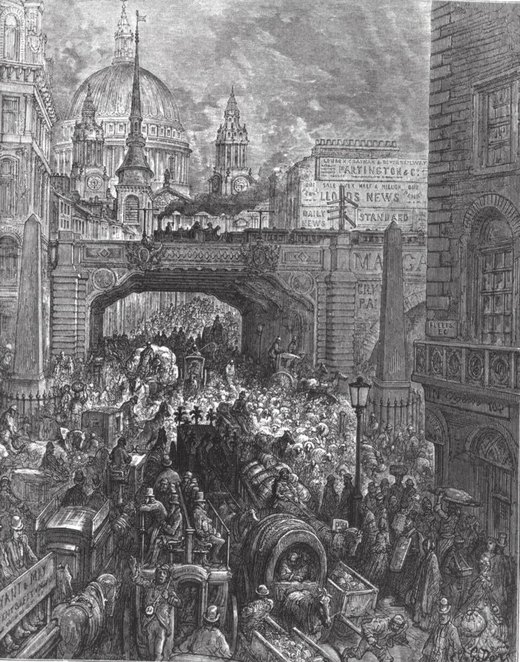
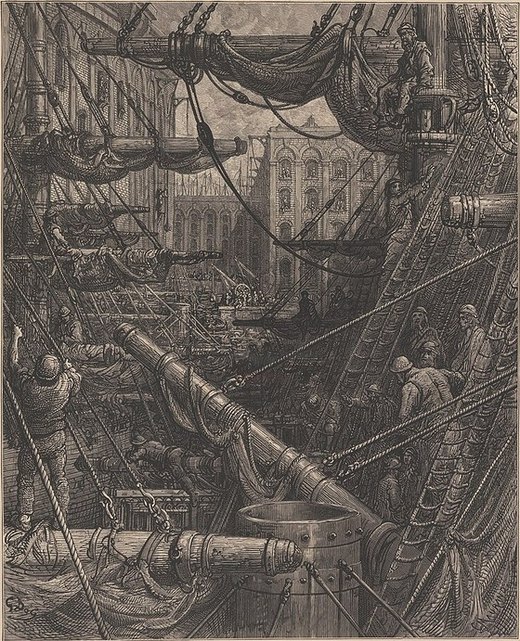
Moving goods in Victorian London, 1872. Find a cart, a horse, a ship and its ropes.
Exercise 1. Match the family and the job
Write the letter next to each family name.
| Family | Job |
|---|---|
| 1. The Forks family | A. Stock Controller |
| 2. The Pick family | B. Courier |
| 3. The Wrap family | C. Lorry Driver |
| 4. The Wheels family | D. Packer |
| 5. The Scan family | E. Freight Forwarder |
| 6. The Dock family | F. Forklift Driver |
| 7. The Route family | G. Transport Planner |
| 8. The Parcel family | H. Order Picker |
| 9. The Port family | I. Shipping Clerk |
| 10. The Pallet family | J. Warehouse Manager |
Answers
- The Forks family: F (Forklift Driver)
- The Pick family: H (Order Picker)
- The Wrap family: D (Packer)
- The Wheels family: C (Lorry Driver)
- The Scan family: A (Stock Controller)
- The Dock family: I (Shipping Clerk)
- The Route family: G (Transport Planner)
- The Parcel family: B (Courier)
- The Port family: E (Freight Forwarder)
- The Pallet family: J (Warehouse Manager)
Exercise 2. Who am I?
Read and find the job.
- I move pallets. Who am I?
- I collect products for each order. Who am I?
- I pack orders. Who am I?
- I drive goods across the country. Who am I?
- I check stock levels. Who am I?
- I prepare shipping documents. Who am I?
- I plan delivery routes. Who am I?
- I deliver parcels. Who am I?
Answers
- I am a forklift driver.
- I am an order picker.
- I am a packer.
- I am a lorry driver.
- I am a stock controller.
- I am a shipping clerk.
- I am a transport planner.
- I am a courier.
Exercise 3. English or French?
Give the English job.
- le cariste
- le préparateur de commandes
- l'emballeur
- le chauffeur poids lourd
- le gestionnaire de stock
- l'agent d'expédition
- le planificateur transport
- le livreur
Answers
- Forklift Driver
- Order Picker
- Packer
- Lorry Driver
- Stock Controller
- Shipping Clerk
- Transport Planner
- Courier
The AEPE deck: ten families
| Family | Job | En français | The wordplay |
|---|---|---|---|
| Cuddle | Childminder | l'assistant maternel | A cuddle is a warm hug for a child. |
| Nappy | Nursery Nurse | l'auxiliaire de crèche | Nursery nurses change babies' nappies. |
| Crayon | Classroom Assistant | l'ATSEM | Young children draw with crayons. |
| Lullaby | Nanny | le garde d'enfants à domicile | A lullaby is a soft song that helps a baby sleep. |
| Bottle | Paediatric Nurse | le puériculteur | Babies drink milk from a bottle. |
| Stork | Midwife | le sage-femme | In old stories, a stork brings the baby. |
| Swing | Play Leader | l'animateur | Children play on the swings in the playground. |
| Mash | Nursery Cook | le cuisinier de crèche | Mash is soft food, like mashed potatoes, for little ones. |
| Words | Speech Therapist | l'orthophoniste | A speech therapist helps children find their words. |
| Rota | Nursery Manager | le directeur de crèche | A rota is the list that says who works when. |
Exercise 1. Match the family and the job
Write the letter next to each family name.
| Family | Job |
|---|---|
| 1. The Cuddle family | A. Play Leader |
| 2. The Nappy family | B. Paediatric Nurse |
| 3. The Crayon family | C. Midwife |
| 4. The Lullaby family | D. Speech Therapist |
| 5. The Bottle family | E. Nursery Manager |
| 6. The Stork family | F. Nanny |
| 7. The Swing family | G. Childminder |
| 8. The Mash family | H. Nursery Cook |
| 9. The Words family | I. Classroom Assistant |
| 10. The Rota family | J. Nursery Nurse |
Answers
- The Cuddle family: G (Childminder)
- The Nappy family: J (Nursery Nurse)
- The Crayon family: I (Classroom Assistant)
- The Lullaby family: F (Nanny)
- The Bottle family: B (Paediatric Nurse)
- The Stork family: C (Midwife)
- The Swing family: A (Play Leader)
- The Mash family: H (Nursery Cook)
- The Words family: D (Speech Therapist)
- The Rota family: E (Nursery Manager)
Exercise 2. Who am I?
Read and find the job.
- I look after children at home. Who am I?
- I care for babies. Who am I?
- I help the teacher. Who am I?
- I look after children in the family's home. Who am I?
- I care for babies and young children. Who am I?
- I help mothers when babies are born. Who am I?
- I organise games. Who am I?
- I prepare meals. Who am I?
Answers
- I am a childminder.
- I am a nursery nurse.
- I am a classroom assistant.
- I am a nanny.
- I am a paediatric nurse.
- I am a midwife.
- I am a play leader.
- I am a nursery cook.
Exercise 3. English or French?
Give the English job.
- l'assistant maternel
- l'auxiliaire de crèche
- l'ATSEM
- le garde d'enfants à domicile
- le puériculteur
- le sage-femme
- l'animateur
- le cuisinier de crèche
Answers
- Childminder
- Nursery Nurse
- Classroom Assistant
- Nanny
- Paediatric Nurse
- Midwife
- Play Leader
- Nursery Cook
Périscolaire: games and sport
Variante AEPE : ces élèves travailleront en accueil périscolaire et en accueil de loisirs. Cinq minutes du temps de vocabulaire portent sur les jeux et le sport, et la production finale se fait en menant un jeu en anglais. On insiste sur des consignes courtes et sûres.
| English | En français |
|---|---|
| a relay race | une course de relais |
| tag | le jeu du chat |
| hopscotch | la marelle |
| hide-and-seek | cache-cache |
| a skipping rope | une corde à sauter |
| a ball game | un jeu de ballon |
| a team | une équipe |
| a whistle | un sifflet |
| a cone | un plot |
| to line up | se mettre en rang |
| to take turns | chacun son tour |
| to warm up | s'échauffer |
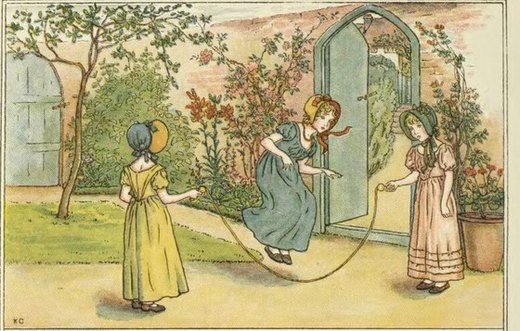
Children's games in 1889. Which games can you see? What are the children doing?
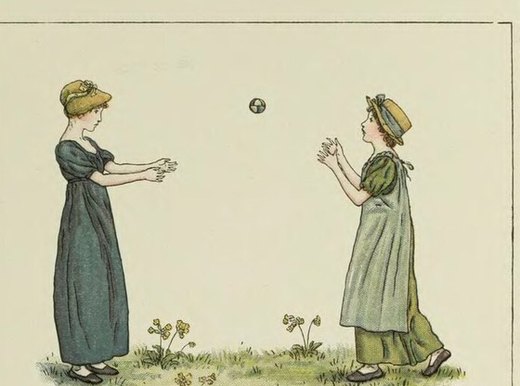
Simple, safe instructions
To give an instruction, use the verb alone: Line up! To say no: Don't + verb: Don't push! To play together: Let's + verb: Let's play tag!
- Line up, please!
- Take turns!
- Pass the ball!
- Wait for the whistle!
- Stay inside the cones!
- Walk, don't run!
- Don't push!
- Hold hands, please.
- Stop when you hear the whistle.
- Let's warm up!
- Drink some water.
- Well done, everybody!
AEPE exercise. Complete the instructions
- Children, up! We're going outside.
- Wait for the before you start.
- Don't ! Walk, please.
- You throw the stone and hop: it's .
- Two : the red team and the blue team.
- One by one, please. Take !
- Before the race, let's warm .
- Run to the cone and give the baton to the next runner: it's a race.
Answers
- line
- whistle
- run
- hopscotch
- teams
- turns
- up
- relay
The wordplay (le jeu de mots)
La figure de style est le jeu de mots (en anglais pun ou wordplay) : un mot qui rappelle autre chose. Ici, le nom de famille rappelle un objet du métier. On le fait expliquer en anglais par une phrase simple : A bun is a small bread roll. Bakers make buns.
A pun is a joke with a word. In Happy Families, the family name is a pun: it tells you the job.
Exercise 5. Explain the pun
- Why is the baker called Bun?
- Why is the butcher called Bones?
- Why is the barber called Block?
- Why is the brewer called Bung?
- Why is the doctor called Dose?
- Why is the sweep called Soot?
- Why is the tailor called Tape?
- Why is the painter called Pots?
- Why is the carpenter called Chip?
- Why is the grocer called Grits?
Answers
- A bun is a small round bread roll. Bakers make buns.
- A butcher cuts meat, and meat has bones.
- A block is a wooden head. Barbers used it to hold and shape wigs.
- A bung is the stopper that closes a barrel of beer.
- A dose is the amount of medicine you take.
- Soot is the black dust inside a chimney.
- A tailor uses a tape measure to measure his customers.
- A painter works with pots of paint.
- A chip is a small piece of wood that falls when you cut it.
- Grits are coarsely ground grain. Grocers sold them in their shops.
- Why is the cashier called Till?
- Why is the shelf-stacker called Stack?
- Why is the sales assistant called Deal?
- Why is the window dresser called Mannequin?
- Why is the store manager called Chief?
- Why is the customer service adviser called Smile?
- Why is the e-commerce manager called Click?
- Why is the sales rep called Pitch?
- Why is the marketing assistant called Promo?
- Why is the florist called Petal?
Answers
- A till is the cash register where a cashier works.
- To stack means to put things one on top of the other.
- A good deal is a good price. Sales assistants offer deals.
- A mannequin is the figure that wears clothes in a shop window.
- A chief is a boss, the person in charge.
- A good adviser always welcomes customers with a smile.
- Online customers click to buy.
- A sales pitch is what you say to convince a client.
- A promo is a promotion, a special offer.
- Petals are the coloured parts of a flower.
- Why is the forklift driver called Forks?
- Why is the order picker called Pick?
- Why is the packer called Wrap?
- Why is the lorry driver called Wheels?
- Why is the stock controller called Scan?
- Why is the shipping clerk called Dock?
- Why is the transport planner called Route?
- Why is the courier called Parcel?
- Why is the freight forwarder called Port?
- Why is the warehouse manager called Pallet?
Answers
- The forks are the two metal arms that lift the pallets.
- To pick means to take items from the shelves for an order.
- To wrap means to cover something with paper or film.
- A lorry has a lot of wheels.
- A stock controller scans barcodes to count the stock.
- The loading dock is where lorries are loaded.
- A route is the way a lorry goes from A to B.
- A courier delivers parcels.
- Goods travel through ports on ships.
- A warehouse is full of pallets.
- Why is the childminder called Cuddle?
- Why is the nursery nurse called Nappy?
- Why is the classroom assistant called Crayon?
- Why is the nanny called Lullaby?
- Why is the paediatric nurse called Bottle?
- Why is the midwife called Stork?
- Why is the play leader called Swing?
- Why is the nursery cook called Mash?
- Why is the speech therapist called Words?
- Why is the nursery manager called Rota?
Answers
- A cuddle is a warm hug for a child.
- Nursery nurses change babies' nappies.
- Young children draw with crayons.
- A lullaby is a soft song that helps a baby sleep.
- Babies drink milk from a bottle.
- In old stories, a stork brings the baby.
- Children play on the swings in the playground.
- Mash is soft food, like mashed potatoes, for little ones.
- A speech therapist helps children find their words.
- A rota is the list that says who works when.
Exercise 6. Invent a pun
Find a funny family name for each job. Use an object from the job.
- Mr , a dentist
- Mr , a hairdresser
- Mr , a gardener
- Mr , a pizza chef
- Mr , a firefighter
- Mr , a photographer
- Mr , a plumber
- Mr , a postman
Possible answers
- Mr Smile or Mr Floss
- Mrs Comb or Mrs Curl
- Mr Rake or Mrs Rose
- Mr Crust or Mrs Cheese
- Mrs Hose or Mr Ladder
- Miss Flash or Mr Lens
- Mr Pipe or Mrs Tap
- Mr Stamp or Mrs Letter
3. Le point du professeur
On part de ce que les élèves devront dire pendant le jeu, puis on donne les outils. Le professeur mène ce temps au tableau ; les élèves recopient la trace écrite.
Ce que dit le professeur
- « Pendant le jeu, vous allez demander une carte précise à un camarade. Comment dit-on : est-ce que tu as Madame Bun ? » On recueille les propositions (souvent You have Mrs Bun? ou Have you Mrs Bun?) et on les écrit au tableau sans juger.
- « En anglais, pour poser la question, on a besoin d'un outil : do. » On écrit Do you have Mrs Bun? et on fait répéter en chœur, avec l'intonation montante.
- « Pour répondre, on ne dit pas seulement Yes : on reprend do. » Yes, I do. / No, I don't. On fait jouer trois questions rapides entre élèves.
- « Madame Bun, c'est la femme du boulanger. En anglais, le possesseur vient d'abord, avec apostrophe s. » the baker's wife. On fait trouver the butcher's son, the sweep's daughter.
- « Règle de la maison : sans Excuse me ni please, pas de carte ! » On écrit les formules de politesse et la question plus soutenue Could I have…, please?
- « À la fin, vous présenterez une famille : He repairs cars. Qu'est-ce qui change par rapport à I repair ? » On entoure le -s de la troisième personne.
Board summary: copy it
1. Asking for a card
Rule: to ask a question with have, use do.
Form: Do + you + have + card? Short answers: Yes, I do. / No, I don't.
Use: to ask if someone has something.
Examples: Do you have Mrs Bun? Yes, I do. Here you are. Do you have Master Soot? No, I don't. Sorry!
With he or she: Does Emma have Miss Tape? Yes, she does.
2. Whose card? The possessive 's
Rule: the owner comes first, then 's, then the person or thing.
Form: the baker + 's + wife = the baker's wife.
Examples: the butcher's son, the doctor's daughter, the tailor's wife.
3. Being polite
Excuse me (to start), please, Could I have Mrs Bun, please? Here you are. Thank you! Sorry!
4. Presenting someone: present simple
Rule: with he, she, it, add -s to the verb.
Examples: He repairs cars. She bakes bread. He washes hair (‑es after s, sh, ch, x).
Common mistakes
You have Mrs Bun?→ Do you have Mrs Bun?Yes, I have.→ Yes, I do.the wife of the baker→ the baker's wifethe bakers wife→ the baker's wife (apostrophe!)He repair cars.→ He repairs cars.Does he repairs cars?→ Does he repair cars?
French / English
| En français | In English |
|---|---|
| Est-ce que tu as Mme Bun ? | Do you have Mrs Bun? |
| Oui. / Non. | Yes, I do. / No, I don't. |
| la femme du boulanger | the baker's wife |
| Il répare des voitures. | He repairs cars. |
In French, the owner comes after (du boulanger). In English, the owner comes first (the baker's).
Quick check
- ___ you have Mr Chip? (Do / Does)
- No, I ___. Sorry! (don't / haven't)
- Mrs Tape is the tailor___ wife.
- He ___ (clean) chimneys.
- Excuse me, Lina, ___ I have Miss Bun, please?
- Yes, I do. ___ you are.
Answers
- Do
- don't
- tailor's
- cleans
- could
- Here
4. The game
Game rules
- Play in groups of four. Shuffle the 40 cards and deal them all: ten cards each.
- Look at your cards. The list at the bottom shows the four members of the family. The coloured name is the card you have.
- On your turn, ask one player for one card. You can only ask for a family when you already have a card from it.
- Say: Excuse me, Lucas, do you have Mrs Bun, the Baker? No excuse me, no please: no card!
- If the player has it, they say: Yes, I do. Here you are. Say Thank you! and play again.
- If not, they say: No, I don't. Sorry! Now it's their turn to ask.
- When you have the four cards of a family, put them down and say: I've got the whole family!
- The game ends when all ten families are complete. The player with the most families wins.
Golden rule: English only. One sentence in French and you miss your next turn.
In the Victorian rules, a player who didn't have the card answered Not at home!
Impression : Imprimez en couleur, sur papier cartonné si possible, puis découpez le long des pointillés. Plastifiez ensuite les cartes pour qu'elles durent : c'est un petit investissement, vite amorti, car les cartes servent d'une année sur l'autre. Un jeu de 40 cartes (cinq pages A4, neuf cartes par page) par groupe de quatre.
Traditional (PDF)Vente (PDF)Logistique (PDF)AEPE (PDF) Voir les cartes à l'écran
Différenciation : pour les plus fragiles, laisser la liste des métiers sur la table pendant le jeu.
5. Practice
Step 1Recognise
Exercise 7. Choose the right word
- you have Mr Bones?
- Lucas have Mrs Pots?
- Yes, I .
- No, she .
- Mrs Soot is the wife. (sweep's / sweeps)
- He hair. (cut / cuts)
- They in a shop. (work / works)
- me, Emma, do you have Miss Dose?
- Could I have Master Tape, ?
- you are! (Here / There)
Answers
- Do
- Does
- do
- doesn't
- sweep's
- cuts
- work
- Excuse
- please
- Here
Step 2Guided
Exercise 8. Write it with 's
- the wife of the baker →
- the son of the butcher →
- the daughter of the barber →
- the wife of the brewer →
- the son of the doctor →
- the daughter of the sweep →
- the wife of the tailor →
- the son of the painter →
Answers
- the baker's wife (Miss / Mrs / Master Bun)
- the butcher's son (Miss / Mrs / Master Bones)
- the barber's daughter (Miss / Mrs / Master Block)
- the brewer's wife (Miss / Mrs / Master Bung)
- the doctor's son (Miss / Mrs / Master Dose)
- the sweep's daughter (Miss / Mrs / Master Soot)
- the tailor's wife (Miss / Mrs / Master Tape)
- the painter's son (Miss / Mrs / Master Pots)
- the wife of the cashier →
- the son of the shelf-stacker →
- the daughter of the sales assistant →
- the wife of the window dresser →
- the son of the store manager →
- the daughter of the customer service adviser →
- the wife of the e-commerce manager →
- the son of the sales rep →
Answers
- the cashier's wife (Miss / Mrs / Master Till)
- the shelf-stacker's son (Miss / Mrs / Master Stack)
- the sales assistant's daughter (Miss / Mrs / Master Deal)
- the window dresser's wife (Miss / Mrs / Master Mannequin)
- the store manager's son (Miss / Mrs / Master Chief)
- the customer service adviser's daughter (Miss / Mrs / Master Smile)
- the e-commerce manager's wife (Miss / Mrs / Master Click)
- the sales rep's son (Miss / Mrs / Master Pitch)
- the wife of the forklift driver →
- the son of the order picker →
- the daughter of the packer →
- the wife of the lorry driver →
- the son of the stock controller →
- the daughter of the shipping clerk →
- the wife of the transport planner →
- the son of the courier →
Answers
- the forklift driver's wife (Miss / Mrs / Master Forks)
- the order picker's son (Miss / Mrs / Master Pick)
- the packer's daughter (Miss / Mrs / Master Wrap)
- the lorry driver's wife (Miss / Mrs / Master Wheels)
- the stock controller's son (Miss / Mrs / Master Scan)
- the shipping clerk's daughter (Miss / Mrs / Master Dock)
- the transport planner's wife (Miss / Mrs / Master Route)
- the courier's son (Miss / Mrs / Master Parcel)
- the wife of the childminder →
- the son of the nursery nurse →
- the daughter of the classroom assistant →
- the wife of the nanny →
- the son of the paediatric nurse →
- the daughter of the midwife →
- the wife of the play leader →
- the son of the nursery cook →
Answers
- the childminder's wife (Miss / Mrs / Master Cuddle)
- the nursery nurse's son (Miss / Mrs / Master Nappy)
- the classroom assistant's daughter (Miss / Mrs / Master Crayon)
- the nanny's wife (Miss / Mrs / Master Lullaby)
- the paediatric nurse's son (Miss / Mrs / Master Bottle)
- the midwife's daughter (Miss / Mrs / Master Stork)
- the play leader's wife (Miss / Mrs / Master Swing)
- the nursery cook's son (Miss / Mrs / Master Mash)
Exercise 9. He or she: add -s
Put the verb in the present simple.
- A baker (make) bread and buns.
- A butcher (cut) meat.
- A barber (cut) men's hair.
- A brewer (make) beer.
- A doctor (prescribe) medicine.
- A sweep (clean) chimneys.
- A tailor (make) suits.
- A painter (paint) houses.
- A carpenter (work) with wood.
- A grocer (sell) food.
Answers
- makes
- cuts
- cuts
- makes
- prescribes
- cleans
- makes
- paints
- works
- sells
- A cashier (scan) products.
- A shelf-stacker (fill) the shelves.
- A sales assistant (help) customers.
- A window dresser (decorate) shop windows.
- A store manager (run) the store.
- A customer service adviser (answer) customers' questions.
- An e-commerce manager (run) the online shop.
- A sales rep (visit) clients.
- A marketing assistant (prepare) special offers.
- A florist (make) bouquets.
Answers
- scans
- fills
- helps
- decorates
- runs
- answers
- runs
- visits
- prepares
- makes
- A forklift driver (move) pallets.
- An order picker (collect) products for each order.
- A packer (pack) orders.
- A lorry driver (drive) goods across the country.
- A stock controller (check) stock levels.
- A shipping clerk (prepare) shipping documents.
- A transport planner (plan) delivery routes.
- A courier (deliver) parcels.
- A freight forwarder (organise) international shipments.
- A warehouse manager (run) the warehouse.
Answers
- moves
- collects
- packs
- drives
- checks
- prepares
- plans
- delivers
- organises
- runs
- A childminder (look) after children at home.
- A nursery nurse (care) for babies.
- A classroom assistant (help) the teacher.
- A nanny (look) after children in the family's home.
- A paediatric nurse (care) for babies and young children.
- A midwife (help) mothers when babies are born.
- A play leader (organise) games.
- A nursery cook (prepare) meals.
- A speech therapist (help) children speak.
- A nursery manager (run) the nursery.
Answers
- looks
- cares
- helps
- looks
- cares
- helps
- organises
- prepares
- helps
- runs
Exercise 10. Complete the dialogue
- Excuse me, Tom, you have Mrs Bun?
- Yes, I . Here you .
- Thank !
- Excuse me, Sara, do you have Master Chip, the carpenter son?
- No, I . Sorry!
- Sara have Miss Grits? Yes, she .
- Could I Mr Tape, please?
- Yes! I've got the whole !
Answers
- do
- do / are
- you
- 's
- don't
- Does / does
- have
- family
Step 3Correct
Exercise 11. Find and correct the mistake
- You have Mr Pots?
- Yes, I have.
- She is the wife of the doctor.
- Mr Bun make bread.
- Does he sells meat?
- Give me Miss Soot!
- No, I doesn't.
- It's the tailors son.
Answers
- Do you have Mr Pots?
- Yes, I do.
- She is the doctor's wife.
- Mr Bun makes bread.
- Does he sell meat?
- Excuse me, could I have Miss Soot, please?
- No, I don't.
- It's the tailor's son.
Step 4Your turn
Exercise 12. Ask and answer
With a partner, write four short exchanges for the game. Use Excuse me, do you have…?, a short answer and Thank you or Sorry.
6. Final production: invent a family
En binôme, les élèves inventent une famille moderne liée à leur filière, avec un nom drôle (un jeu de mots). Ils dessinent le personnage ou choisissent une photo pour le cadre d'une nouvelle carte, puis présentent leur famille à l'oral. Les nouvelles cartes peuvent servir à un second jeu fait par la classe.
Expression task
Invent a family for your job. Give it a funny name. Then present it to the class in four or five sentences.
- This is … He's / She's a …
- He / She works in … He / She + verb-s …
- His / Her wife / husband / son / daughter, …, is … too.
Models
- Mr Byte, the Developer: This is Mr Byte. He's a developer. He writes code and builds apps. His daughter, Miss Byte, is a developer too.
- Mrs Wrench, the Mechanic: This is Mrs Wrench. She's a mechanic. She repairs cars. Her husband, Mr Wrench, is a mechanic too.
- Miss Brush, the Hairdresser: This is Miss Brush, the hairdresser's daughter. Her mother, Mrs Brush, cuts and colours hair.
- Master Plug, the Electrician: This is Master Plug, the electrician's son. His father, Mr Plug, installs sockets and lights.
- Mrs Barcode, the Cashier: This is Mrs Barcode. She's a cashier. She scans products and gives customers their receipt. Her son, Master Barcode, is a cashier too.
- Mr Hanger, the Sales Assistant: This is Mr Hanger. He's a sales assistant in a clothes shop. He folds clothes and helps customers.
- Miss Basket, the Shelf-Stacker: This is Miss Basket, the shelf-stacker's daughter. Her father, Mr Basket, fills the shelves every morning.
- Mr Bargain, the Store Manager: This is Mr Bargain. He's a store manager. He runs a supermarket and talks to suppliers.
- Mr Label, the Packer: This is Mr Label. He's a packer. He packs orders and puts a label on every box. His wife, Mrs Label, is a packer too.
- Mrs Crate, the Order Picker: This is Mrs Crate. She's an order picker. She collects products with a scanner.
- Miss Van, the Courier: This is Miss Van, the courier's daughter. Her mother, Mrs Van, delivers parcels in town.
- Mr Barcode, the Stock Controller: This is Mr Barcode. He's a stock controller. He counts the stock every Friday.
- Mrs Whistle, the Play Leader: This is Mrs Whistle. She's a play leader. She organises games in the playground. Her son, Master Whistle, loves relay races.
- Mr Story, the Childminder: This is Mr Story. He's a childminder. He reads stories to the children.
- Miss Puzzle, the Classroom Assistant: This is Miss Puzzle, the classroom assistant's daughter. Her mother, Mrs Puzzle, helps the children with their puzzles.
- Mrs Hopscotch, the Holiday Club Leader: This is Mrs Hopscotch. She works in a holiday club. She teaches the children outdoor games.
AEPE: lead a game in English
Your family works in an after-school or holiday club. One of you leads a short game for the class in English.
- Say the name of the game: Let's play tag!
- Make teams or choose a player: You are "it".
- Give three instructions: Line up. Run to the cone. Touch a player.
- Give one safety rule: Don't push!
- Start the game: Ready? Wait for the whistle!
Quick oral assessment (/10)
| Critère | Points |
|---|---|
| Nomme correctement les métiers | 3 |
| Utilise les formules de politesse | 3 |
| Pose une question bien formée (Do you have…?) | 2 |
| Présente sa famille moderne avec clarté | 2 |
Going further
B2 towards C1For students who want to go on to language studies
A. Register: three ways to ask
Do you have Mrs Bun? is neutral and international. Have you got Mrs Bun? is typically British and informal (answer: Yes, I have / No, I haven't). Have you Mrs Bun? sounds old-fashioned today: you find it in Victorian texts.
Rewrite in the two other forms: 1. Do you have the grocer's son? 2. Has Emma got Miss Pots? 3. Have you the brewer's wife?
Answers
- Have you got the grocer's son? / Have you the grocer's son?
- Does Emma have Miss Pots? / Has Emma Miss Pots?
- Do you have the brewer's wife? / Have you got the brewer's wife?
B. Reported speech
Report what the players said.
- Lucas: “Emma, do you have Mrs Bun?”
- Emma: “Yes, I do.”
- Sara: “I don't have the doctor's son.”
- Tom: “Could I have Miss Soot, please?”
- Lina: “I've got the whole family!”
- The teacher: “Don't speak French!”
Answers
- Lucas asked Emma if she had Mrs Bun.
- Emma said that she did.
- Sara said that she didn't have the doctor's son.
- Tom asked if he could have Miss Soot.
- Lina said that she had got the whole family.
- The teacher told us not to speak French.
C. Translate into English
Careful with the plural possessive: the sweeps' children (apostrophe after the s).
- Est-ce que la fille du médecin connaît le fils du tailleur ?
- Les enfants des ramoneurs travaillaient dur.
- Excusez-moi, pourriez-vous me passer la femme du boucher, s'il vous plaît ?
- Elle n'a pas la carte, alors c'est son tour.
- Le jeu du boulanger et de sa famille amuse encore les enfants.
Answers
- Does the doctor's daughter know the tailor's son?
- The sweeps' children worked hard.
- Excuse me, could you pass me the butcher's wife, please?
- She doesn't have the card, so it's her turn.
- The game of the baker and his family still amuses children.
D. Read and discuss
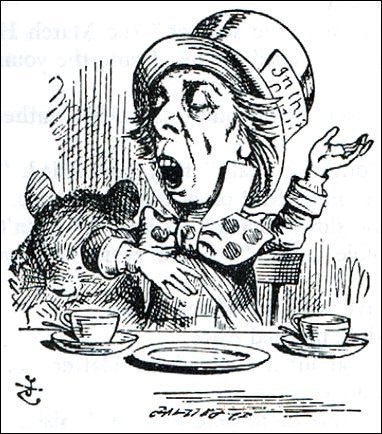
Happy Families was devised by John Jaques, of the London games firm Jaques, which dates the game to 1851, the year of the Great Exhibition. The cards were not signed, but the drawings are generally attributed to John Tenniel, who later illustrated the first edition of Alice's Adventures in Wonderland (1865). The original game had eleven families, not ten: the eleventh was Dip the Dyer. The faces are grotesque on purpose: the game was made to amuse children, not to teach them a lesson.
- Why do you think the publisher wanted a famous cartoonist?
- What does a dyer do? Why is he called Dip?
- Why were games for fun, not for lessons, something new at the time?
- A name that matches a job is sometimes called an aptronym. Invent three aptronyms for jobs in your own field.
Possible answers
- A famous artist sells the game: people knew his drawings from the press.
- A dyer colours cloth: he dips it into dye.
- Many earlier children's card games were designed to teach, for example geography or history.
E. Write (120 to 160 words)
“Should your name decide your job?” Write a short, lively article for the school website. Use the Happy Families puns as examples, give your opinion and include at least two reported sentences.
Extension AEPE: lead a playground game
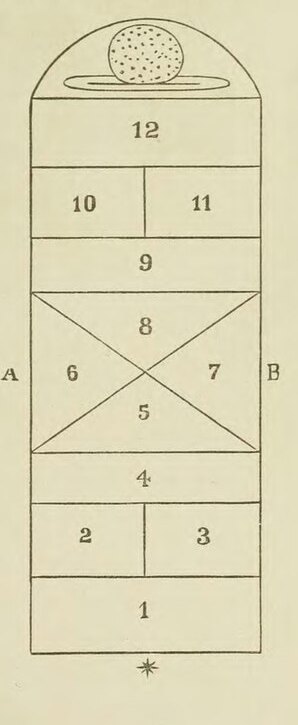
Prolongement facultatif, en séance suivante ou en atelier : chaque groupe prépare puis mène un jeu de cour en anglais pendant trois minutes (relais, chat, marelle, corde à sauter). Le reste de la classe joue les enfants. On évalue la clarté des consignes et la règle de sécurité.
- Choose a game: a relay race, tag, hopscotch or a skipping game.
- Write the rules in five short instructions.
- Add two safety rules (Walk, don't run. Don't push.).
- Prepare a warm-up: Let's warm up! Jump ten times!
- Plan what to say if a child is sad or left out: Come and play with us! You can be in my team.
- End the game kindly: Well done, everybody! Line up, please. Time for a drink.
Homework
- Learn the ten jobs of your deck and the four family titles (Mr, Mrs, Master, Miss).
- Write five sentences to present your invented family. Use the present simple with -s.
- Record yourself asking three polite questions for the game (Excuse me, … do you have …?).
- Draw or find a picture for one card of your family, for the class game.
Sources et références
- Victoria and Albert Museum, Happy Families, A New and Diverting Game for Juveniles, John Jaques & Son, vers 1860, dessins attribués à Sir John Tenniel, n° MISC.47-1975 : collections.vam.ac.uk/item/O26656. Autre exemplaire : collections.vam.ac.uk/item/O26630. À montrer à l'écran depuis le site du musée.
- Règles d'origine : le joueur qui n'a pas la carte répond Not at home et c'est à lui de jouer ; on ne demande une carte que si l'on possède déjà un membre de la famille (V&A, notice O26630).
- The World of Playing Cards, « Jaques' Happy Families » : wopc.co.uk.
- Images : toutes du domaine public, téléchargées et servies depuis le site, référence complète sous chaque image (Wikimedia Commons, Tufts Digital Library, Yale Center for British Art, Internet Archive).
- Illustrations des cartes : créées avec une IA pour ce jeu (style aquarelle de livre pour enfants). C'est la seule exception : toutes les autres images de la séance sont des œuvres anciennes du domaine public.
- Vidéo : sur YouTube, chercher « how to play Happy Families card game » pour montrer une vraie partie filmée en anglais.